
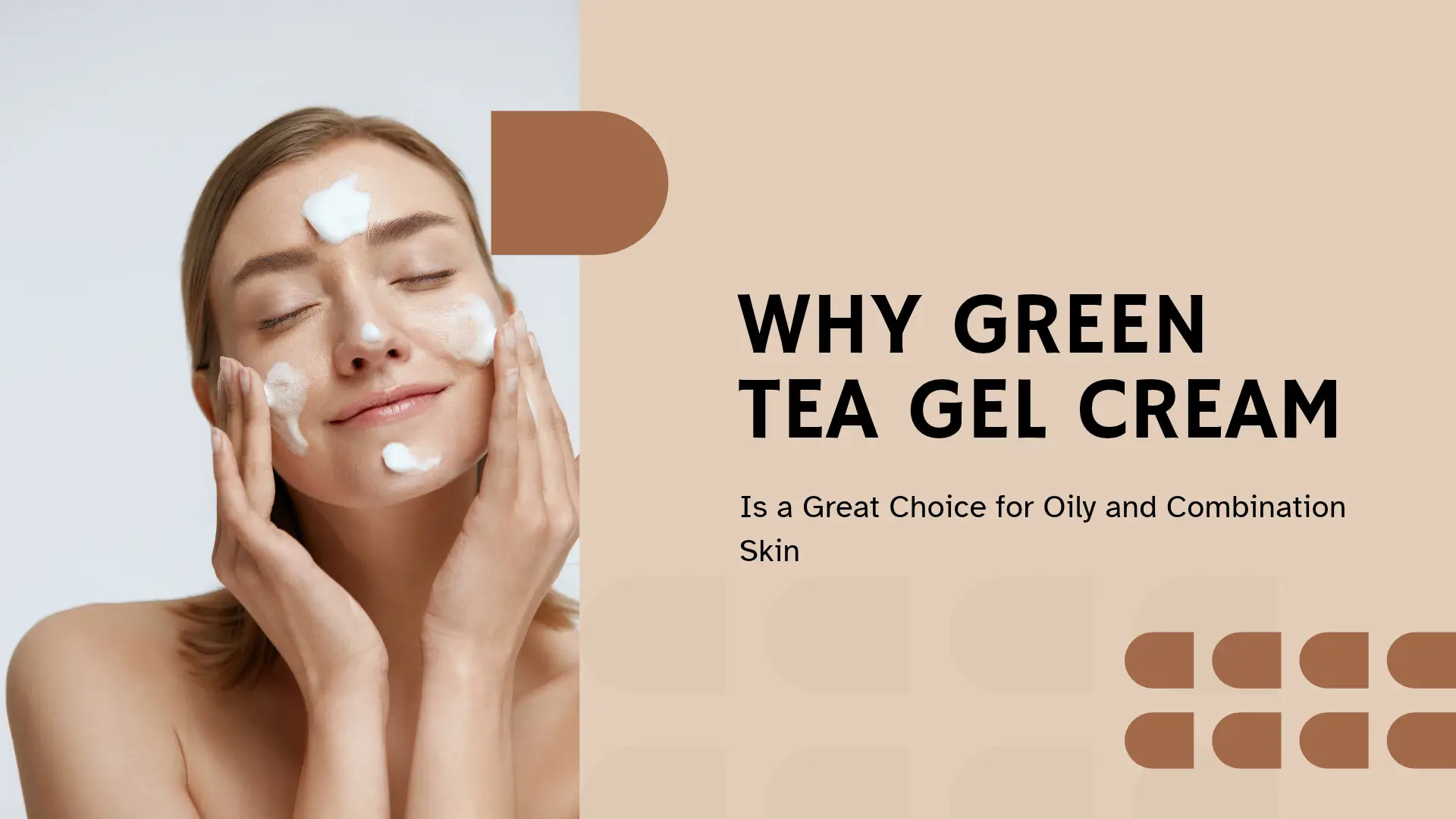
If you live in a climate with four distinct seasons or really, any place where the weather can’t seem to make up its mind you already know the struggle of finding a moisturizer that doesn’t betray you. For those of us with oily or combination skin, the stakes feel higher. You want hydration, but the wrong cream leaves you looking like you just finished a sprint to catch the bus. You want to control shine, but stripping your skin only makes it produce more oil. It’s a delicate dance, and frankly, most moisturizers step on your toes.
This is where green tea gel cream enters the chat, quietly and without much fanfare. It isn’t a flashy new acid peel or a trendy serum with a waitlist. It’s a humble, lightweight moisturizer category that has been steadily earning its place in the routines of skincare enthusiasts from Seoul to Toronto. And for anyone dealing with a shiny T-zone, visible pores, or that frustrating tight-yet-greasy feeling by 3 p.m., it might just be the Goldilocks solution you’ve been looking for.
Let’s break down why this specific type of moisturizer works so well for skin that can’t decide if it’s dry or oily, and how to know if it’s right for you.
The Oily Skin Paradox: Why You Still Need Moisture
There is a stubborn myth that persists in Western skincare culture: if your skin is oily, you should skip moisturizer. This logic feels intuitive why add more oil to an already oily situation? But dermatologists and K-beauty experts have been shouting the opposite from the rooftops for years. When you strip your skin of moisture, the stratum corneum (the outermost layer) sends a panic signal to your sebaceous glands to ramp up oil production. The result is a cycle of over-cleansing, tightness, and then a midday oil slick that no blotting paper can tame.
The solution isn’t to avoid moisturizer. It’s to choose the right moisturizer. You need something that delivers water-based hydration without occlusive, heavy oils that sit on the surface and clog pores.
This is the fundamental appeal of a gel cream. Unlike traditional creams, which rely on butters and oils to seal in moisture, gel creams use water-binding ingredients called humectants like glycerin, hyaluronic acid, and panthenol to pull hydration into the skin . The texture is light, often bouncy or jelly-like, and it absorbs in seconds. It gives your skin a drink of water without leaving a greasy film behind.
Add green tea to the equation, and you get a formula that doesn’t just hydrate but also actively works to balance the skin’s oil production and calm inflammation.
What Makes Green Tea a Powerhouse for Combination Skin
Green tea (Camellia Sinensis) has been a staple in K-beauty for decades, long before it became a trendy label claim in Western products. In the context of oily and combination skin, its benefits are particularly well-documented.
First, there’s the sebum regulation. Green tea is rich in polyphenols, particularly EGCG (epigallocatechin gallate), which has been shown to help inhibit the production of sebum . This doesn’t mean it will magically dry up your skin. Instead, it helps send a signal to your oil glands to chill out. For combination skin, this is especially valuable. You can apply a green tea gel cream to your entire face, and it will hydrate the dry patches on your cheeks while helping to mattify the oily zones on your forehead and nose.
Second, green tea is a potent anti-inflammatory. If your oily skin is also acne-prone or sensitive, you know the frustration of redness and irritation that comes with breakouts. The catechins in green tea help soothe visible redness and calm the skin barrier . It’s not a spot treatment, but over time, it creates a less reactive environment for your skin.
Third, green tea is an antioxidant. While antioxidants are often marketed for anti-aging, their role in oily skin is equally important. Oxidation of sebum is one of the factors that can lead to clogged pores and dullness. By neutralizing free radicals from pollution, UV exposure, and just daily life, green tea helps keep the complexion looking clearer and more even .
When you put these benefits into a gel cream format, you get a product that hydrates, balances, and soo the sall without the weight.
Etude’s Green Tea Mask and the Gel Cream Philosophy
You might be familiar with the Etude Green Tea Mask, specifically the 0.2 Therapy Air Mask. It’s a staple in many K-beauty routines, loved for its thin, breathable sheet and its ability to calm irritated skin while delivering a burst of moisture . The mask is soaked in a watery essence featuring green tea extract, and it’s particularly recommended for oily, combination, and sensitive skin types because it hydrates without feeling heavy .
The philosophy behind that mask light weight, water-based hydration with soothing botanicals is exactly what makes green tea gel creams so effective. You’re essentially giving your skin the same kind of refreshing, non-greasy moisture delivery, but in a leave-on format that works every day. The mask is a weekly treat; the gel cream is the daily workhorse.
Many K-beauty brands have taken this concept and run with it. Innisfree, for example, offers a Green Tea Panthenol Gel Cream specifically designed for oily and combination skin, using cold-brew green tea and panthenol to absorb excess sebum while delivering deep hydration . COSRX’s Hydrium Green Tea Aqua Soothing Gel Cream takes a similar approach, focusing on cooling and calming heated, acne-prone complexions with a jelly texture that melts into the skin . These products aren’t identical, but they share a DNA: hydration through water, not oil, with green tea as the star.
The Canadian and Western Context: Why This Matters Here
If you’re reading this from Canada, the US, the UK, or Europe, you might be wondering if this K-beauty favorite translates to your local climate. The answer is yes, but with some nuance.
In Canada, the struggle is seasonal. A gel cream is a godsend in the humid summer months, especially in cities like Toronto or Montreal where the heat can make even the most resilient skin feel slick. But what about winter? Canadian winters are brutaldry, cold, and windy. A lightweight gel cream alone might not be enough for January in Winnipeg or Edmonton. However, this is where layering comes in. A green tea gel cream can serve as a hydrating serum-like step before a richer moisturizer, or it can be your morning moisturizer if you spend most of your day indoors with central heating (which can be drying, but a gel cream with glycerin and panthenol can still support the barrier).
For our neighbors in the US and the UK, the logic is similar. If you live in a humid climate like Florida or the UK’s damp winters, a gel cream might be all you need year-round. If you’re in a drier climate, it’s a fantastic daytime option or a buffer layer under sunscreen.
There’s also a cultural shift to consider. Western skincare has historically leaned toward rich, creamy moisturizers as the gold standard of hydration. The rise of K-beauty has introduced a different vocabulary: “chok chok” (the Korean term for hydrated, supple skin), “water-light,” and “breathable.” For oily and combination skin, this vocabulary is liberating. It says: you don’t need to suffer through a heavy cream to be moisturized. You can have hydration that feels like nothing at all.
How to Choose (and Use) a Green Tea Gel Cream
Not all gel creams are created equal. Here’s what to look for when you’re scanning ingredient lists and deciding where to spend your money.
Look for green tea high on the ingredient list. In K-beauty, ingredients are listed in order of concentration. If green tea extract (Camellia Sinensis Leaf Extract) appears near the top, you’re getting a meaningful dose. If it’s at the very bottom, after preservatives and fragrance, it’s likely just a marketing token.
Check the humectants. Glycerin, butylene glycol, panthenol (vitamin B5), and sodium hyaluronate are your friends. These ingredients pull water into the skin. Panthenol is particularly lovely for combination skin because it also has soothing properties .
Avoid heavy occlusives if you’re very oily. Some gel creams still include small amounts of dimethicone or lightweight oils, which can be fine for combination skin. But if you’re on the oilier end of the spectrum, look for formulas that are explicitly oil-free or non-comedogenic.
Patch test if you’re sensitive. Green tea is generally well-tolerated, but gel creams often contain botanical extracts, essential oils, or fragrance. If your skin is reactive, do a small patch test on your jawline before committing to your whole face.
As for how to use it: apply your green tea gel cream after cleansing, toning, and any treatment serums (like niacinamide or salicylic acid), but before sunscreen in the morning. A pea-sized amount is usually enough for the entire face. If you have combination skin, you can apply a slightly thicker layer to your dry cheeks and a thinner layer to your T-zone. In the evening, it can be your final moisturizing step, or you can follow it with a sleeping mask if your skin feels particularly dehydrated.
The Verdict: A Quiet Hero for Unpredictable Skin
Green tea gel cream isn’t the most dramatic product in the skincare world. It doesn’t sting, it doesn’t peel, and it won’t give you instant Instagram-worthy results. What it does is far more valuable: it provides consistent, lightweight hydration that respects your skin’s natural balance. For those of us with oily or combination skin, that consistency is everything.
It’s the moisturizer that lets you forget about your skin for a few hours. No midday shine breakthrough, no tight feeling after cleansing, no clogged pores from a cream that was too rich. Just a comfortable, calm, and balanced complexion which, in the end, is exactly what we were all looking for in the first place.