
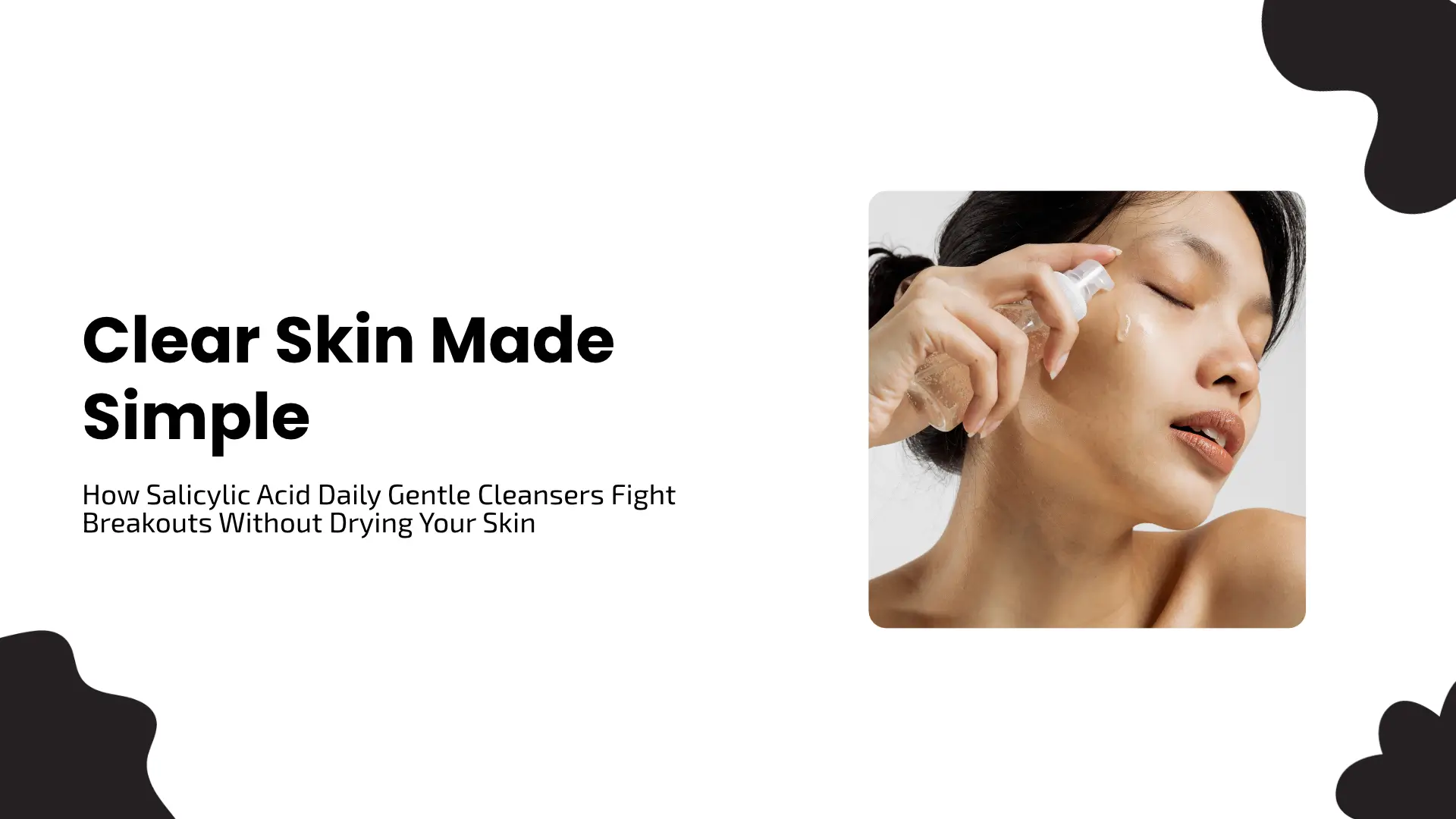
Let me guess. You’ve stood in the skincare aisle (or scrolled endlessly on Sephora) holding a bottle that promises “clear skin” and “oil control,” only to put it back because you’ve been burned before. Literally. The tight, squeaky-clean feeling that turns into flaking by noon. The redness that shows up right after you wash your face. The dreaded purge that makes you wonder if clearer skin is even worth it.
I’ve been there. We’ve all been there.
Here’s the truth that dermatologists have been shouting from the rooftops for years: you don’t need to strip your skin to clear it. The idea that acne-prone skin needs harsh, drying ingredients is one of the most stubborn myths in skincare and it’s costing you your skin barrier.
Enter the quiet hero of the clear-skin world: the salicylic acid daily gentle cleanser. Not a spot treatment. Not a ten-step routine. Just one thoughtful, well-formulated step that does the heavy lifting without the collateral damage.
And if you’ve been curious about the K-beauty wave that’s bringing matcha, PDRN, and gentle exfoliating acids into the conversation, you’re in the right place. Brands like TIRTIR are proving that you can get that glass-skin clarity without the tight, angry aftermath . Let’s break down why this matters, especially if you’re dealing with dry winters, congested pores, and skin that’s frankly tired of being punished.
Why Your Skin Barrier Is the Real MVP (and Why Harsh Cleansers Ruin It)
Before we talk about salicylic acid, we need to talk about what sits on top of your skin right now: the stratum corneum. It’s your skin barrier, and it’s basically a brick wall made of skin cells (the bricks) and lipids like ceramides and cholesterol (the mortar). When it’s intact, your skin holds onto moisture, keeps irritants out, and looks calm and plump.
When you use a cleanser that’s too harsh think high-pH bar soaps, aggressive foaming agents, or alcohol-heavy formulas you dissolve that mortar. Water escapes. Irritants waltz in. Your skin responds by producing more oil to compensate, which leads to more clogged pores, which leads to more breakouts. It’s a vicious cycle.
This is why the “squeaky clean” feeling is actually a red flag. That tightness isn’t cleanliness; it’s damage.
A well-formulated salicylic acid cleanser sidesteps this entirely. It delivers just enough exfoliation to keep pores clear while leaving the barrier intact. And in a Canadian or Northern European climate where indoor heating and freezing outdoor air already wage war on your moisture levels that distinction isn’t just nice to have. It’s essential.
What Salicylic Acid Actually Does (Without the Scary Chemistry Lesson)
Salicylic acid is a beta hydroxy acid, or BHA. The “B” matters here. Unlike alpha hydroxy acids (AHAs) like glycolic or lactic acid, which are water-soluble and work on the surface of your skin, salicylic acid is oil-soluble . That means it can actually dissolve into the sebum clogging your pores, gently breaking down the mix of dead skin cells and oil that creates blackheads and blemishes.
Think of it like a pipe cleaner for your pores. It doesn’t just sweep the surface; it gets inside the congestion and softens it from within. Over time, this prevents the clog from turning into a full-blown inflammatory pimple.
Here’s the beautiful part: salicylic acid is also naturally anti-inflammatory. It’s related to the same compound found in willow bark (which is where aspirin came from, historically). So while it’s clearing your pores, it’s also calming the redness and swelling that come with active breakouts .
The catch? Salicylic acid can be drying if it’s formulated poorly or used at too high a concentration without buffering ingredients. That’s why the delivery system matters just as much as the active itself. A daily gentle cleanser is designed for short contact usually thirty seconds to a minute so you get the pore-clearing benefits without the prolonged exposure that can irritate skin .
The K-Beauty Twist: Why Matcha and PDRN Are Changing the Cleanser Game
K-beauty has always been ahead of the curve on one thing: making actives feel gentle. While Western skincare spent years equating “effective” with “stinging,” Korean formulations have long prioritized barrier support alongside results. That philosophy is exactly what’s made products like the TIRTIR Matcha Pack Cleanser so interesting to watch .
Let’s talk about what’s happening in these formulas, because it’s genuinely clever.
Matcha (Camellia Sinensis) isn’t just a trendy latte flavor. The green tea leaf is rich in EGCG, a powerful antioxidant that helps calm redness, regulate sebum production, and protect against environmental stress . In a cleanser, matcha powder also provides a microscopic physical exfoliationtiny particles that help lift dead skin cells without the jagged edges of traditional scrubs .
PDRN (Polydeoxyribonucleotide) is the buzzy ingredient you’ve probably seen popping up everywhere. Traditionally derived from salmon DNA, vegan versions now exist (including matcha-derived PDRN) and are prized for their ability to support skin repair and calming . In a cleanser, it’s a bit of a novel concept most PDRN products are serums or creams but the logic holds: if you’re going to exfoliate, you might as well soothe simultaneously.
The acid complex matters too. The TIRTIR formula doesn’t rely on salicylic acid alone. It uses a blend of lactic acid, betaine salicylate, gluconolactone, and capryloyl salicylic acid . That’s a mix of AHAs, a gentler BHA derivative, and a polyhydroxy acid (PHA). The result is layered exfoliation that’s more gradual and less likely to trigger the tightness that high-dose salicylic acid can cause.
Clinical results from the brand claim a 12.85% reduction in redness after a single use and a 15.77% reduction in pore impurities . Take brand-funded studies with a grain of salt, but the formulation philosophyexfoliate while soothingis sound.
How to Use a Salicylic Acid Cleanser Without Wrecking Your Skin
This is where most people go wrong. They buy a good product and then use it like a scrub, twice a day, with hot water, followed by three actives. Then they wonder why their skin is angry.
Here’s the routine that actually works, whether you’re using a dedicated salicylic acid cleanser or a multi-tasking formula like the TIRTIR Matcha Pack:
Start Slow (Yes, Really)
If you’ve never used chemical exfoliants before, start with two to three uses per week. Your skin needs time to adjust. The “purge” that people talk about that period where your skin seems to get worse before it gets better is real, but it shouldn’t be severe. If you’re experiencing burning, peeling, or widespread redness, that’s not purging. That’s irritation. Back off .
The Thirty-Second Rule
Salicylic acid needs a moment to work. Apply your cleanser to dry or slightly damp skin (depending on the formula’s instructions) and let it sit for thirty seconds to a minute before adding water and lathering. This contact time is what allows the acid to penetrate pores and do its job. Rinsing immediately defeats the purpose .
Temperature Matters
Hot water strips lipids. Use lukewarm water. Your skin barrier will thank you, especially in January.
Follow With Hydration, Not More Actives
After cleansing, your skin is primed to absorb hydration. Reach for a hydrating toner, a hyaluronic acid serum, or a barrier-supporting moisturizer. Avoid layering another exfoliant (like a glycolic serum or a retinol) immediately after. Give your skin one job at a time.
Don’t Skip Sunscreen
Salicylic acid doesn’t make your skin photosensitive in the way that retinoids do, but exfoliated skin is more vulnerable to UV damage. A daily SPF is non-negotiable even in Canadian winters, even when it’s cloudy .
The Canadian Context: Why This Matters More North of the Border
If you live in Toronto, Montreal, Vancouver, or anywhere with a real winter, you know the drill. October hits, the heating turns on, and suddenly your face feels like sandpaper by 3 PM. Your summer skincare routine light weight gels, mattifying primers stops working. Your skin is simultaneously oily and dehydrated.
This is exactly where a gentle salicylic acid cleanser shines. It keeps pores clear without stripping whatever moisture your skin is desperately clinging to. Harsher acne washes that might have been tolerable in July will leave you flaking and raw in February.
The TIRTIR Matcha Pack Cleanser, for example, is designed to be used two ways: as a daily foam cleanser for gentle maintenance, or as a 1–2 minute “pack” treatment for deeper pore clearing . That flexibility is genuinely useful for a climate that swings from humid summers to bone-dry winters. In the colder months, you might use it as a quick daily cleanse and reserve the pack method for when your pores feel congested.
And for my fellow Canadians dealing with the double whammy of dry indoor air and congested T-zones? A formula that exfoliates with acids and soothes with matcha and centella is a much smarter bet than a traditional “acne wash” that leaves you reaching for three layers of moisturizer .
What About Europe and the UK? Same Logic, Different Water
If you’re in London, Manchester, Paris, or Berlin, you’re dealing with hard water, central heating, and pollutiona trifecta that can leave skin both congested and sensitized. Hard water contains minerals like calcium and magnesium that can disrupt the skin barrier and leave a residue that interferes with cleansing .
A gentle salicylic acid cleanser helps cut through that residue while the soothing ingredients (matcha, allantoin, centella) work to calm the irritation that hard water can trigger. The key is avoiding the temptation to over-cleanse. Two gentle passes are better than one aggressive scrub.
UK-based retailers like Feel Unique and Cult Beauty have been stocking TIRTIR and similar K-beauty brands, which signals that the demand for gentle, effective exfoliation is crossing borders . The era of “burn it all down” acne treatment is ending. Good riddance.
The Ingredient Decoder: What to Look For (and What to Avoid)
Not all salicylic acid cleansers are created equal. Here’s a quick cheat sheet for reading labels, whether you’re considering the TIRTIR Matcha Pack or any other option:
Look for:
- Salicylic acid at 0.5–2% : This is the sweet spot for daily use. Higher concentrations aren’t necessarily better for a rinse-off product .
- Soothing buffers: Allantoin, panthenol, centella asiatica, madecassoside, green tea. These counteract the drying potential of the acid .
- Gentle surfactants: Sodium cocoyl isethionate, coco-betaine, and potassium cocoyl glycinate are milder than sodium lauryl sulfate .
- Humectants: Glycerin should be high on the list. It pulls water into the skin and helps prevent that post-cleanse tightness .
Be cautious with:
- High concentrations of drying alcohols (denatured alcohol, SD alcohol) near the top of the ingredient list.
- Physical scrubs combined with strong acids that’s a recipe for over-exfoliation.
- Fragrance if you have reactive skin. Some people are fine with it; others aren’t. Know thyself.
Realistic Expectations: What Clear Skin Actually Looks Like
Here’s the part no one tells you: clearing your skin takes time. Not three days. Not a week. Think in terms of four to six weeks of consistent use before you judge whether a product is working.
Salicylic acid cleansers aren’t magic. They won’t erase hormonal acne overnight or fix cystic breakouts that need dermatological intervention. What they will do is keep your pores clear enough that your other products can do their jobs, reduce the frequency of surface-level congestion, and make your skin look smoother and more even over time.
The goal isn’t perfect, poreless skin. That doesn’t exist outside of filters. The goal is skin that feels comfortable, looks clear enough that you don’t think about it every time you pass a mirror, and doesn’t punish you for trying to take care of it.
A gentle salicylic acid cleanser whether it’s a classic like The In key List or a K-beauty innovation like TIRTIR’s matcha-powered formulais a tool. It’s not a miracle. But used consistently, with realistic expectations and a good moisturizer, it’s one of the most reliable tools in the clear-skin arsenal .
The Bottom Line
Your skin doesn’t need to suffer for clarity. The tight, dry, “clean” feeling is a myth sold to us by decades of marketing that equated punishment with progress. Salicylic acid, formulated thoughtfully and used gently, can clear pores and calm breakouts without compromising your barrier.
The K-beauty influencematcha, PDRN, layered gentle acids has pushed the entire category forward. We’re no longer choosing between “works” and “gentle.” We can have both.
If you’re ready to simplify, start with one good cleanser. Use it consistently. Moisturize like you mean it. Wear your sunscreen. And give your skin the one thing it actually needs: a break from being at war with itself.